Beyond the Owner Led Ceiling: Building a Scalable MSP Sales Engine with Brendan Rose
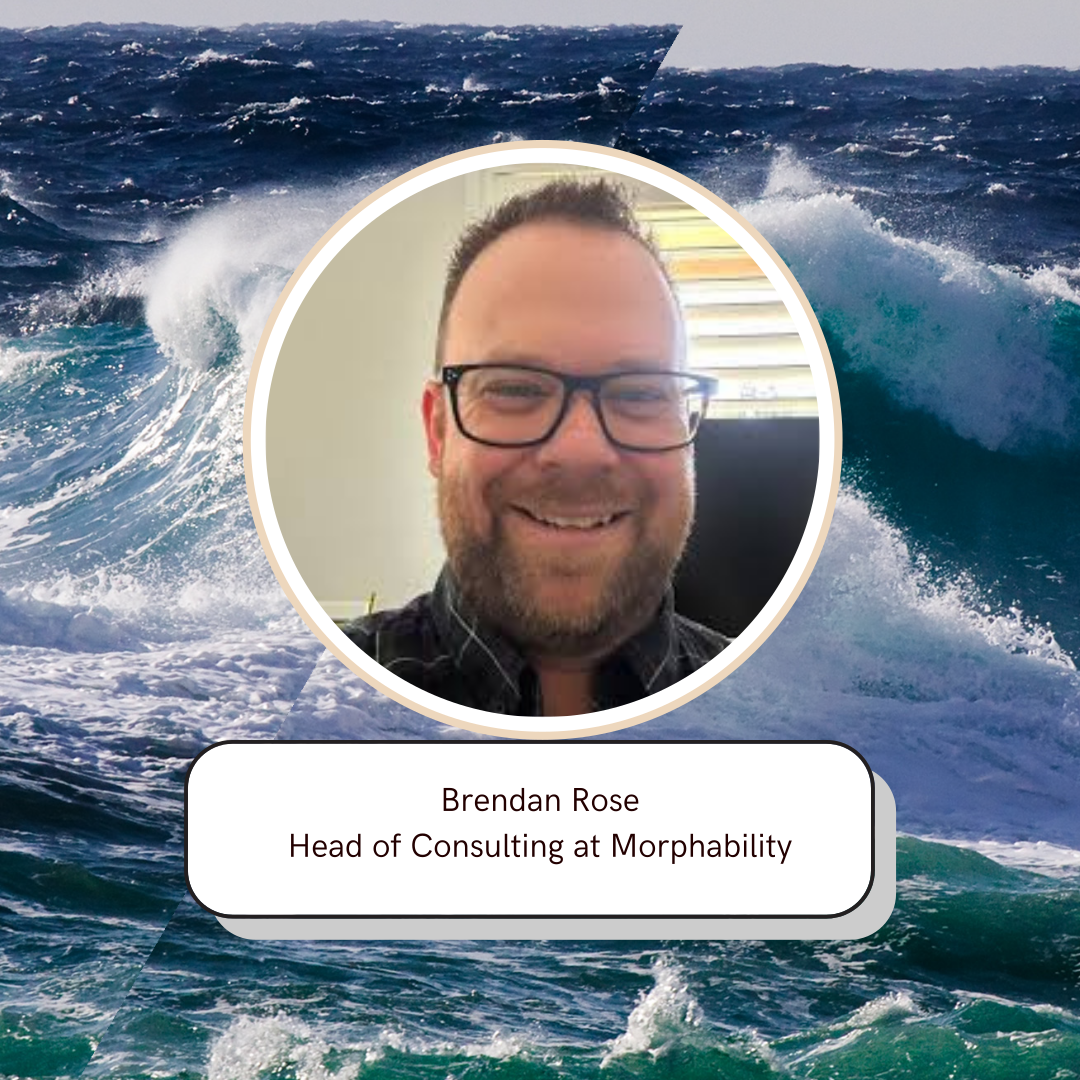
When MSP owners tell us they are stuck the story is always familiar. You have great clients you sweat every month and the business feels like it is running you instead of the other way around. Over the last 30 years Nick and I have seen this pattern again and again and we know how to fix it. We have built and scaled MSPs from small founder run teams to sustainable businesses with predictable revenue and happy staff. In this episode of MSP Mastery: Ctrl Alt Deliver we sit down with Brendan Rose to test those lessons against real world experience. Brendan is a seasoned Adelaide MSP leader turned consultant at Morphability and his recent work with sales teams and clients gives us a practical mirror for the frameworks we use every day. Refer to this episode if you want the full conversation, but below we unpack the key themes and the actions you can use in your business today.
MSP Mastery
5/20/20265 min read
Growth first or people first
Our perspective and principle
Scaling an MSP is not about adding heads at random. Before you hire you need a clear map of the customer journey, the offer you will sell and the metrics that will tell you if the hire is working. Too many owners assume a strong salesperson will magically fix growth. In our experience growth starts with clarity. Know your product, know your pricing, know how long a sale takes and what operational load it creates.
Brendan's evidence
Brendan put it bluntly on the show. Hire the person first and you will probably waste money. He has seen businesses recruit a BDM because they wanted immediate results then realise the process, product definition and quoting flow were not in place. That hire becomes expensive and frustrating for everyone.
Why this works
A documented sales map forces you to answer the hard questions. What does a managed service sale look like compared to a project sale? Which clients are ideal now and which can you pursue later? When you can produce a quote while standing in front of a customer you have a product that is repeatable. That clarity reduces friction for a salesperson and reduces your cost of sale.
Takeaway for owners
Block time now and map the selling process before you hire. If you must hire earlier, make the role tightly defined and temporary so you do not create confusion. Expect that a new salesperson will at best break even in their first year unless you have done the prep work.
Leads versus conversion
Our perspective and principle
The shiny promise of more leads clouds a deeper truth. If your conversion is poor the next lead will simply cost more money. We always advise MSPs to work two lanes at once. Improve the way you convert and retain clients while you test lead generation channels.
Brendan's evidence
Brendan used the phrase business discussion to explain the value of structured reviews. He recommended a quarterly cadence for tech roadmaps and business reviews because that is where share of wallet grows. He also highlighted that many clients have shadow AI and compliance needs that surface in these conversations. Those are the hooks that convert well because they connect to real problems.
Why this works
Leads are just opportunities. What turns opportunity into revenue is the conversation you have with the buyer and the confidence your prospect has in your ability to deliver. When you demonstrate a roadmap that reflects your client outcomes you reduce buyer doubt and shorten sales cycles.
Takeaway for owners
If you do not have a regular business review process introduce a simple quarterly review now. Use it to discuss the tech roadmap, risk and priorities. While you test lead channels keep improving the conversion conversation so every lead has a higher chance of becoming a long term client.
Breaking the owner led ceiling
Our perspective and principle
Owner led growth is great to a point. At some stage the owner must hand the keys to someone else or the business will not scale. The common mistake is assuming other people share your context. Ownership of the sales process must be deliberate and heavily managed at the start.
Brendan's evidence
Brendan was clear. If it is the first time you have hired a salesperson you must manage them personally. He used the Velcro metaphor for early stage coaching. Nick and I agree. You cannot delegate that intense onboarding to a service manager or an admin person. The owner has to be present, visible and relentless in the early weeks.
Why this works
Sales is as much about relationship and nuance as it is about technique. The new person needs to learn the language of your business, how you describe value and how you handle objections. The fastest way for them to learn that is side by side interaction with the owner in real meetings and in the car afterwards analysing what happened.
Takeaway for owners
Plan to be the primary coach for a new salesperson for a minimum of 90 days. Attend meetings together, record calls, debrief in the car and document the process. That investment pays back in fewer mistakes and a salesperson who actually represents your company.
First hire sequence and the sales admin
Our perspective and principle
When owners ask what to hire first the practical answer is often sales admin. Removing low value tasks from the owner creates immediate leverage. Once the administration is handled you can decide whether you are the natural sales person or whether you need a dedicated BDM or account manager.
Brendan's evidence
Brendan argued that owners paying themselves to do admin tasks are effectively charging the business a premium for low value work. He recommends hiring a sales admin early because it buys you back the time to focus on selling or strategic tasks.
Why this works
The opportunity cost of doing admin is high. Owners are expensive resources and their best use is setting direction, building relationships and solving hard problems. A sales admin removes busy work and creates capacity to build pipeline and refine product packaging.
Takeaway for owners
Hire a sales admin when your time is more valuable than the admin cost. After that make a conscious choice. If you love selling keep doing it and hire account managers. If you do not love it hire a BDM and structure the role with clear KPIs and shadowing.
Sales and operations alignment
Our perspective and principle
Sales must not be an island. A sustainable growth plan requires visibility into project backlog, resource capacity and delivery lead times. We always build an opportunity pipeline and a project intake cadence before we let sales accelerate.
Brendan's evidence
Brendan described the nightmare of selling deals that cannot be delivered for months. He and Nick both emphasised project pipeline scorecards and forecast hours as early metrics that force operational decisions like hiring or prioritising.
Why this works
When sales understand capacity they sell responsibly. When operations understand incoming demand they plan. Scorecards and simple pipeline metrics turn guesswork into decisions. The result is fewer failed promises and happier customers.
Takeaway for owners
Start tracking project hours in pipeline and compare them to delivery capacity. Use simple sign off dates and conditional start dates in proposals so prospects understand when work will be scheduled. If backlog exceeds capacity, hire earlier or manage sales cadence until you expand delivery.
Hero moment case study
The council road trip
One vivid story Brendan shared was the regional road trips with a salesperson through local councils. The act of spending hours in the car together and sitting in vendor booths created trust, opened doors and built a pipeline that delivered meaningful contracts over 12 months. Brendan used the example to show how deliberate face to face time builds credibility in ways that a single pitch cannot.
Why it mattered
That time together did two things. It taught the salesperson how to sell the business in the owner voice and it created relationships that would not have formed through emails or cold calls. Nick and I have seen this repeatedly. The owner presence converts a contact into a client and the repeated shared experience builds the cultural glue you cannot document.
What you should do
If you hire someone new, book a series of joint customer days and local events. Be the owner in the room. Debrief afterwards. Record the learnings and fold them into your sales hub documentation.
Conclusion
Scaling an MSP is not a mystery. It is a sequence of decisions about product clarity, conversion, who does the selling and how you align delivery. Brendan Rose reinforced the lessons Nick and I have taught for decades. Map before you hire. Invest in conversion and business reviews while testing lead gen. Coach the new salesperson relentlessly. Remove admin from the owner early. Measure pipeline and capacity so sales and delivery move together. If you take these steps deliberately you will replace frantic growth with predictable expansion that preserves culture and customer experience.
If this article got you thinking reach out to us at MSP Mastery: Ctrl Alt Deliver. Nick and I love helping owners move through the ceiling and grow businesses that work for them. If you would like a template to map your sales process or a simple scorecard to track project pipeline we are happy to share them and continue the conversation.