Building a Modern MSP: Why Focus, Standardisation, and Outcomes Still Win
After nearly thirty years of building and scaling Australian MSPs, Nick and I have seen just about every version of this industry play out. From the early break fix days through to today’s cloud first, automation driven environments, the fundamentals have not changed as much as people think. MSPs still struggle with inconsistent delivery, scattered tooling, and marketing that does not translate into real growth. In this episode of MSP Mastery: Ctrl Alt Deliver, we were joined by Scott Atkinson, CEO of Tribe Tech. Scott brings a wealth of experience across corporate IT and the SMB space, and what stood out in our conversation was how closely his current approach aligns with what we have seen work time and time again. His insights reinforced a number of principles Nick and I have applied across decades of MSP growth, particularly around focus, standardisation, and building a business that is designed to scale rather than react.
MSP Mastery
4/6/20265 min read
Building a Modern MSP: Why Focus, Standardisation, and Outcomes Still Win
After nearly thirty years of building and scaling Australian MSPs, Nick and I have seen just about every version of this industry play out. From the early break fix days through to today’s cloud first, automation driven environments, the fundamentals have not changed as much as people think. MSPs still struggle with inconsistent delivery, scattered tooling, and marketing that does not translate into real growth.
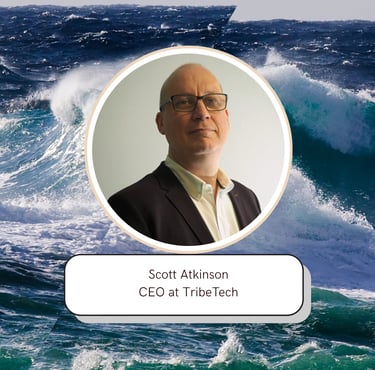
In this episode of MSP Mastery: Ctrl Alt Deliver, we were joined by Scott Atkinson, CEO of Tribe Tech. Scott brings a wealth of experience across corporate IT and the SMB space, and what stood out in our conversation was how closely his current approach aligns with what we have seen work time and time again. His insights reinforced a number of principles Nick and I have applied across decades of MSP growth, particularly around focus, standardisation, and building a business that is designed to scale rather than react.
Why Most MSP Marketing Fails Before It Starts
Marketing is one of the most misunderstood areas in the MSP space. We see it constantly. Owners invest in a website refresh, run a few campaigns, maybe engage an external agency, and then wonder why nothing meaningful comes from it.
Scott shared that he experienced exactly this. Years of trying different approaches, taking advice from multiple sources, and still not seeing traction. What shifted for him was stepping back and understanding that marketing is not a single activity. It is a system.
This is something Nick and I have been saying for years. Marketing only works when all the moving parts are connected. Your target market, your messaging, your offer, and your timing all need to align. If one of those elements is off, the whole system underperforms.
What Scott has done well is move away from random acts of marketing and start building those linkages. The result is not just more leads, but better leads. The right clients, at the right time, with the right expectations. That is where marketing starts to support scale instead of creating noise.
Standardisation Is Not Optional If You Want to Scale
If there is one area where MSPs consistently make life harder than it needs to be, it is in their technical environments. Taking on clients with completely different stacks, different vendors, and different ways of working might feel like flexibility, but it creates operational chaos.
Scott walked through Tribe Tech’s approach of standardising infrastructure from day one. Replacing core components like switching, wifi, and firewalls so every client sits on a consistent foundation.
From our perspective, this is not just a good idea. It is essential.
Over the years, Nick and I have seen countless MSPs stall their growth because they are trying to support too many variations. It drives up training requirements, increases ticket complexity, and makes it almost impossible to build a high performing service desk.
What Scott highlighted, and we completely agree with, is that clients do not care about the brand of switch or firewall. They care that it works. That shift in thinking allows you to design an environment that supports your team first, which in turn delivers a better outcome for the client.
Standardisation reduces noise, improves efficiency, and creates the consistency required to scale service delivery properly.
The Reality of SLAs Versus Business Outcomes
Service Level Agreements have long been treated as a cornerstone of MSP delivery. Yet in practice, they often create more friction than value.
Scott shared his decision to move away from traditional SLAs, and this is a conversation Nick and I have had with many MSPs over the years. The issue is not the concept of accountability. It is how that accountability is measured and communicated.
We have both seen environments where teams spend hours reviewing ticket metrics, debating minor breaches, and calculating small service credits that have no real impact. Meanwhile, the client just wants to know one thing. Is their business running smoothly?
Scott’s approach reframes the conversation around outcomes. If an issue is impacting the client’s ability to operate, it gets immediate attention. If it is not, it is handled appropriately without unnecessary escalation.
This aligns with how we coach MSPs to think about service delivery. Clients measure value based on business impact, not whether a ticket was resolved within a specific number of minutes.
When you shift the focus to outcomes, you naturally improve client relationships and reduce the administrative overhead that comes with rigid SLA structures.
The Hero Moment: When Resilience Gets Tested for Real
We often talk to MSPs about business continuity and disaster recovery, but it is easy for these conversations to stay theoretical. Scott shared a story that brings this into sharp focus.
A few years ago, his office building in Sydney partially collapsed due to construction issues next door. The team had to evacuate immediately, and everything in the office was lost.
What happened next is what matters.
The very next day, the business continued operating. No major disruption, no scrambling to recover systems, no extended downtime. Why? Because the environment had been designed to be cloud first and not dependent on physical infrastructure.
This is exactly what we mean when we talk about aligning technology with real world risk. Disasters are not always dramatic, but they do happen. Fires, floods, structural issues, or even something as simple as losing access to a building can bring an unprepared business to a halt.
Scott now uses this experience as a way to help clients understand the importance of resilience. And from our perspective, there is no stronger proof point than having lived through it yourself.
The Hardest Skill in Business: Saying No
One of the most important lessons Scott shared was the discipline of saying no. It sounds simple, but in practice it is one of the hardest things for MSP owners to do, particularly in the early stages of growth.
Nick and I see this all the time. A new opportunity comes in, it is not quite the right fit, but it is revenue. So the business says yes. Then another one, and another one. Before long, the MSP is supporting a mix of clients that do not align with their ideal model.
Scott has made a clear shift here. Tribe Tech now focuses on specific target markets and only takes on clients that fit their approach. That means turning down work that does not align, even when it is tempting.
This is critical for building a scalable business. The more focused you are, the easier it becomes to standardise, to market effectively, and to deliver consistent outcomes.
Yes, it may mean fewer opportunities in the short term. But the quality of those opportunities, and the profitability that comes with them, is significantly higher.
Conclusion
Our conversation with Scott Atkinson reinforced a number of principles that Nick and I have seen hold true across decades in this industry. Marketing needs to be a connected system, not a series of disconnected activities. Standardisation is essential for scaling service delivery. Outcomes matter more than rigid metrics. And focus, particularly the ability to say no, is what separates sustainable MSPs from those constantly under pressure.
The added layer in Scott’s story is the real world validation of these ideas. When your own business can withstand a major disruption and continue operating, it proves that your approach is not just theory. It works.
If you are looking at your own MSP and thinking about where the friction points are, whether that is inconsistent delivery, too many tools, or the wrong types of clients, these are the areas to start addressing.
As always, if these challenges sound familiar or you want to explore how to apply these principles in your own business, Nick, myself, and the MSP Mastery: Ctrl Alt Deliver team are here to help. Reach out and let’s have a conversation about what scaling the right way could look like for you.