Precision Service Delivery: Lessons in Operational and Leadership Maturity
In the three decades Nick and I have spent building and scaling Australian MSPs, we have seen one truth remain constant regardless of how the technology evolves: your business is only as strong as your operational discipline. Too often, MSP owners treat service delivery as a technical challenge to be solved with better engineering. In reality, it is a business architecture challenge that must be solved with better frameworks. If you do not have the discipline to track your time, the courage to lead your people through mindset shifts, or the foresight to plan for an eventual exit, you are not building an asset; you are merely creating a very stressful job for yourself. In this deep dive episode of MSP Mastery: Ctrl Alt Deliver, Nick and I took a moment to reflect on the core lessons from our recent discussions with industry leaders like David Bugeja, Aaron Lake, Oscar Clift, and Kerry Bolton. While their backgrounds differ, their experiences all point toward the same objective: achieving operational maturity to drive profitability and freedom. These conversations reinforce what we have seen across thirty years of service delivery. Success is not about the latest gadget; it is about the consistency and communication that create real value for your clients.
MSP Mastery
4/30/20265 min read

Precision Service Delivery: Lessons in Operational and Leadership Maturity
In the three decades Nick and I have spent building and scaling Australian MSPs, we have seen one truth remain constant regardless of how the technology evolves: your business is only as strong as your operational discipline. Too often, MSP owners treat service delivery as a technical challenge to be solved with better engineering. In reality, it is a business architecture challenge that must be solved with better frameworks. If you do not have the discipline to track your time, the courage to lead your people through mindset shifts, or the foresight to plan for an eventual exit, you are not building an asset; you are merely creating a very stressful job for yourself.
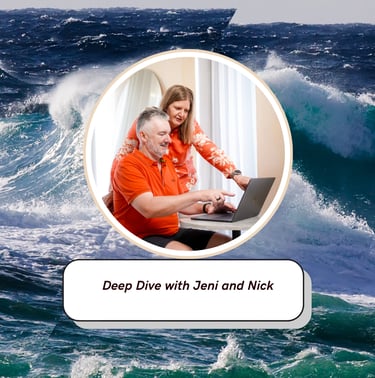
In this deep dive episode of MSP Mastery: Ctrl Alt Deliver, Nick and I took a moment to reflect on the core lessons from our recent discussions with industry leaders like David Bugeja, Aaron Lake, Oscar Clift, and Kerry Bolton. While their backgrounds differ, their experiences all point toward the same objective: achieving operational maturity to drive profitability and freedom. These conversations reinforce what we have seen across thirty years of service delivery. Success is not about the latest gadget; it is about the consistency and communication that create real value for your clients.
Operational Discipline as a Profit Engine
One of the most persistent leaks in any MSP is the unintentional gifting of billable time. We have seen this countless times where service teams simply do not track their efforts because they are busy or they feel a sense of guilt about how long a task took to complete. This is a fundamental misunderstanding of what we do as managed service providers. Even in a fixed price model, time is the primary currency. If you are not recording it accurately, you are making decisions based on fiction rather than fact.
This aligns perfectly with what David Bugeja from Manage Protect shared regarding operational discipline. When technicians decide not to log time because they feel they should have been faster, they are essentially sabotaging the business’s ability to resource correctly. Nick and I have always maintained that the technician should never be the one deciding whether a piece of work is billable or not. Their only job is to record the actual effort. When we get this right, we can look at the data and see if a specific product is becoming a burden. We once saw this with backup solutions that were generating endless tickets. By switching to a more reliable platform based on the data we saw in our PSA, we dropped our support time from half a day a week down to thirty minutes. That is the power of using data to drive your toolset decisions.
The Hidden Journey of Leadership Maturity
Transitioning from a high performing technician to a leader is perhaps the most difficult leap an individual can make in this industry. It requires a complete rewiring of the brain. You have to move from the dopamine hit of solving a technical problem to the long term satisfaction of empowering others to solve problems. This is an emotional journey that many founders and senior staff underestimate. If you are still the smartest person in the room on every technical issue, you have become the bottleneck that prevents your MSP from scaling.
Aaron Lake from Imagine Now IT offered a great example of this evolution. Stepping into a leadership role means dropping old patterns, such as the destructive habit of thinking it is easier to just do it yourself. Nick experienced this first hand early in his career when a mentor told him he was a great engineer but difficult to work with. It was only through a deliberate shift in mindset and a commitment to personal development that he was able to lead thousands of engineers at a national level. For MSP owners, the lesson is clear: you must create an environment where people feel safe to fail and learn. We often used a ninety day two way door policy. People could try a leadership role, and if it did not suit them, they could step back into engineering without shame. This flexibility is what allows an MSP to find its true leaders.
Human Centric Onboarding and Relationship Management
A common mistake we see is the over engineering of technical onboarding at the expense of the human relationship. When a new client or team member joins, they do not care about your RMM scripts or your ticketing status codes as much as they care about the experience of working with you. Most MSP relationships fail in the first ninety days because the expectations were never properly set. If your client does not know how to do business with you, they will eventually find someone else who makes it easier.
Oscar Clift emphasized that onboarding is where the relationship truly succeeds or fails. We saw this manifest when we won a large hospital contract. Instead of just deploying agents, we spent a week on site running six different training sessions. We taught them how to work with us, how to escalate, and what our icons meant. This human touch transformed us from just another vendor into a trusted partner. The same applies to your team. Jeni’s War and Peace induction process was designed to make the first day the best day of an employee’s life. If you hand a new hire a pile of work and tell them to log a ticket for their own laptop setup, you have already lost. You must celebrate their arrival and show them how their work flows through to the final invoice.
Building an Exit Ready Business Asset
Operational maturity is the only real path to exit readiness. A buyer is not looking for your technical brilliance; they are looking for a business that can survive and thrive without the founder. If your identity is so tied up in the business that everything stops when you go on holiday, your valuation will suffer. Founders often underestimate the risk of being the bottleneck. It does not just decrease the value of the business; it increases the stress on everyone involved.
Kerry Bolton’s insights into exit strategies highlight that a business is truly valuable when the owner has no operational role. Nick and I learned through our own M and A journey that buyers look for consistency in contracts and the longevity of client relationships. In the Australian market, a long standing handshake can be worth as much as a signed deal, provided the churn rate is low and the service is reliable. However, the most critical part of an exit is for the owner to have a plan for what comes next. If your work is your only purpose, you will struggle to let go. You must have a purpose beyond the office, whether that is travel, mentoring, or a new venture. Without a what’s next, you will never truly be ready to leave.
Conclusion
Scaling an MSP is about shifting from being a technical expert to being a business architect. Throughout these deep dive discussions, the recurring theme is that maturity comes from discipline, leadership, and a focus on the human experience. Whether you are improving your time entry accuracy or preparing your business for an eventual sale, the goal is the same: to create a sustainable, profitable entity that provides value to clients and freedom to the owners.
Success in this industry is a marathon, not a sprint, and it requires a constant commitment to learning and adaptation. We hope these insights from David, Aaron, Oscar, and Kerry provide you with the clarity needed to take your next step toward maturity. If you are feeling stuck in the day to day operations or struggling to see the path forward, reach out to Nick, myself, and the MSP Mastery team. We are here to help you read the label from the outside of the jar and build the MSP you have always envisioned.