Scaling with Strategy: What Scott Jefferis Reinforced About Building a High Performing MSP
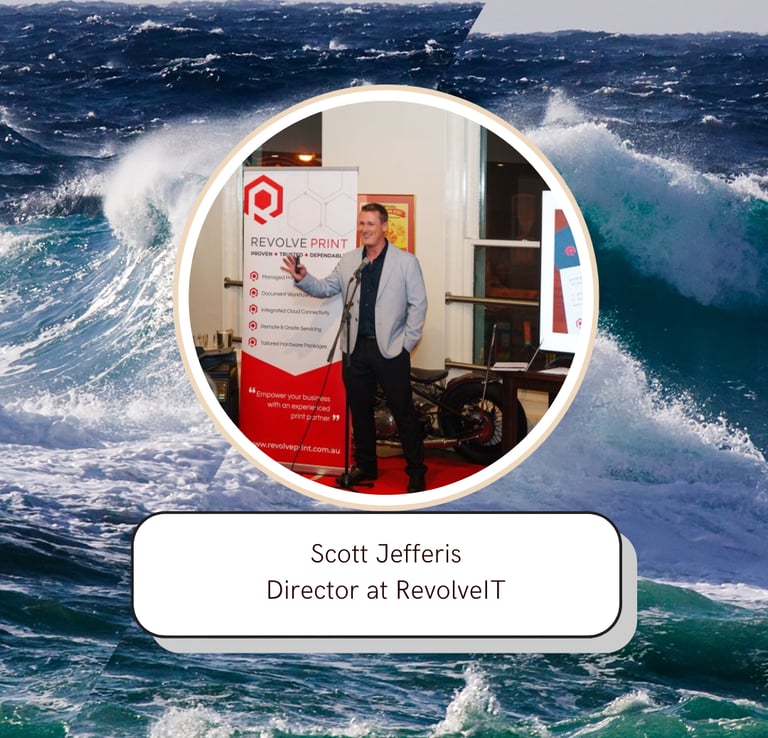
After nearly 30 years in the MSP space, Nick and I have seen just about every version of growth. Fast growth, messy growth, accidental growth, and the kind of growth that is built deliberately with a clear end in mind. The difference always comes down to one thing. Intent. In this episode of MSP Mastery: Ctrl Alt Deliver, we sat down with Scott Jefferis from Revolve IT in Central Victoria. Scott brought over two decades of experience and a journey that mirrors what many MSP owners aspire to do. Build something better the second time around. His story is a strong example of what happens when you combine lessons learned with a clear strategy and the discipline to execute.
MSP Mastery
4/7/20265 min read
Scaling with Strategy: What Scott Jefferis Reinforced About Building a High Performing MSP
After nearly 30 years in the MSP space, Nick and I have seen just about every version of growth. Fast growth, messy growth, accidental growth, and the kind of growth that is built deliberately with a clear end in mind. The difference always comes down to one thing. Intent.
In this episode of MSP Mastery: Ctrl Alt Deliver, we sat down with Scott Jefferis from Revolve IT in Central Victoria. Scott brought over two decades of experience and a journey that mirrors what many MSP owners aspire to do. Build something better the second time around. His story is a strong example of what happens when you combine lessons learned with a clear strategy and the discipline to execute.
What stood out for us was not just what Scott has achieved, but how closely his approach aligns with the frameworks we know drive sustainable MSP success.
Building with Intent from Day One
One of the biggest advantages Scott had when starting Revolve IT was experience. He had already lived through the challenges of scaling an MSP, moving from a technician to a partner, and ultimately running a business. That perspective changes how you approach a new venture.
Nick and I often see MSPs start with a technical mindset. Fix the issue, keep the client happy, and worry about structure later. Scott took a different path. He spent time planning, engaging with peer groups, and defining what he wanted the business to look like before launching.
Then came the real test. Launching at the start of a lockdown.
Where many would have gone into reactive mode, Scott and his business partner Kim stayed focused on building the business the right way. The result speaks for itself. Consistent growth year on year, reaching over 2 million in revenue in just a few years.
This reinforces something we say often. Growth is not about timing. It is about clarity and execution.
The Reality of Growth and the Triage Challenge
As MSPs grow, the cracks do not show up in technology. They show up in operations.
Scott highlighted triage and ticket allocation as an area where improvement would have the biggest impact. This is something we see across almost every MSP we work with. Early on, when the team is small, everything feels efficient. You know every client, every issue, and every ticket.
As the business scales, that visibility disappears.
From our perspective, triage is one of the most misunderstood functions in service delivery. It is not just about assigning tickets. It is about understanding the problem well enough to match it with the right skillset at the right time.
When that breaks down, you see the symptoms immediately. Multiple technicians touching the same ticket. Increased resolution times. Frustrated clients.
Scott raised an important point around cost versus efficiency. Do you put a senior technician in triage, or do you push that down to a junior resource? The answer, as always, is balance. But what matters most is getting it right the first time.
The real opportunity now is combining strong triage thinking with the emerging capabilities of AI within PSA and RMM tools. Automation can support the process, but it cannot replace the human judgement required to truly understand a client issue.
Client Expectations Are Not Optional
If there is one area where we see MSPs consistently fall short, it is in setting expectations.
Scott’s onboarding approach is exactly what we advocate. Get in front of the entire client team and clearly define how the relationship works. What is urgent. What is not. How to log tickets. What your team will do and what you expect from them.
This is not just good practice. It is essential.
Scott’s rule that urgent issues must come through via phone is a simple but powerful control. It ensures visibility, prioritisation, and immediate response. More importantly, it removes ambiguity.
He also shared a perfect example of what happens when expectations are not followed. A client who centralised all communication through one internal person created a bottleneck. Issues were delayed, visibility was lost, and ultimately the relationship failed.
We say this often to MSP owners. You are not just delivering IT services. You are teaching your clients how to work with you. If you do not lead that, the relationship will drift and performance will suffer.
When Great Service Looks Effortless
Some of the best work MSPs do is invisible.
Scott shared two examples that perfectly illustrate this. In one case, his team implemented a 5G failover for a client undergoing building works. When the primary connection was cut, the failover kicked in seamlessly. No disruption. No panic.
In another, his team supported a client that needed to rapidly scale due to a surge in demand following a major weather event. New staff, new devices, expanded systems. All delivered in days using modern deployment tools.
This is what high performing service delivery looks like. Preparation, automation, and execution coming together so that the client barely notices the complexity behind it.
From our perspective, these are the moments that define your value as an MSP. Not when something breaks, but when it does not.
The Process Gap That Slows Everything Down
If there was one area Scott would change if starting again, it is process.
And this is where many MSPs fall into the same trap.
In the early stages, speed wins. You do what is needed to support the client and keep the business moving. Documentation and process feel like a luxury you do not have time for.
Then growth happens.
New staff come in. Knowledge is no longer centralised. Training takes longer. Mistakes increase. What once felt fast now feels chaotic.
Nick and I have both experienced this firsthand. The shift comes when you realise that every undocumented task is something you are committing to doing again and again.
Scott’s reflection here is important. The short term effort required to build processes creates long term scalability. Without it, growth will always be harder than it needs to be.
The key is not perfection. It is progress. Capture the process, make it usable, and improve it over time. And if it is not your strength, delegate it to someone who thrives on structure.
Conclusion
Scott Jefferis brought a practical, real world perspective to this conversation that reinforces many of the principles Nick and I have seen work time and time again.
Build with intent. Stay close to your service delivery as you grow. Set clear expectations with clients. Invest in the right tools and foresight. And most importantly, commit to process early.
There is no single moment where an MSP becomes high performing. It is the accumulation of these decisions over time.
If you are navigating your own growth journey and want to sharpen your approach to service delivery, Nick and I are always up for a conversation. Reach out to the MSP Mastery: Ctrl Alt Deliver team and let’s explore how you can take your MSP to the next level.