The Customer Experience Blueprint: Lessons from 30 Years in the MSP Trenches
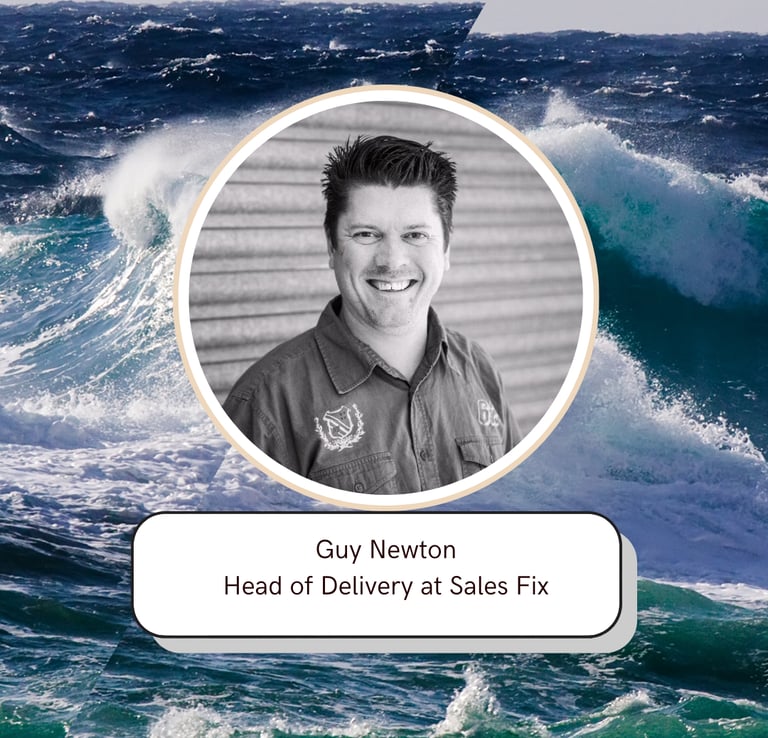
In the world of managed services, technical capability is no longer the differentiator it once was. Over the three decades Nick and I have spent building and scaling Australian MSPs, we have watched the industry evolve from reactive break fix work into a far more mature, service driven model. These days, with the tools and automation available, most providers can resolve technical issues. The real difference now lies in how you deliver that service and how your customers experience it. In this episode of MSP Mastery: Ctrl Alt Deliver, we are joined by Guy Newton, someone whose journey closely mirrors the growth path we see in many MSP professionals. Guy first worked with us at DWM Solutions as a contract technician while running his own one man band business. He then joined the team formally, progressing through the technical ranks into a service delivery manager role, and ultimately stepping into the integrator seat. He later continued that leadership path as service delivery manager at Otto. His experience reinforces many of the principles we have developed and refined over 30 years of running MSPs.
MSP Mastery
4/23/20264 min read
The Customer Experience Blueprint: Lessons from 30 Years in the MSP Trenches
In the world of managed services, technical capability is no longer the differentiator it once was. Over the three decades Nick and I have spent building and scaling Australian MSPs, we have watched the industry evolve from reactive break fix work into a far more mature, service driven model. These days, with the tools and automation available, most providers can resolve technical issues. The real difference now lies in how you deliver that service and how your customers experience it.
In this episode of MSP Mastery: Ctrl Alt Deliver, we are joined by Guy Newton, someone whose journey closely mirrors the growth path we see in many MSP professionals. Guy first worked with us at DWM Solutions as a contract technician while running his own one man band business. He then joined the team formally, progressing through the technical ranks into a service delivery manager role, and ultimately stepping into the integrator seat. He later continued that leadership path as service delivery manager at Otto. His experience reinforces many of the principles we have developed and refined over 30 years of running MSPs.
The Shift from Technical Outcomes to Service Journeys
One of the most important lessons we have learned is that delivering the technical outcome is only part of the job. Clients expect that to be right. What they remember is how the journey felt.
In the early days of building MSPs, it was all about getting the job done. Cash flow dictated decisions and project work created that constant feast or famine cycle. As Guy reflects, moving towards a managed services model reduces that volatility, but it raises the bar on consistency and experience. Customers are no longer just buying outcomes. They are buying confidence, clarity, and ease.
From our perspective, this is where many MSPs fall short. They avoid difficult conversations in favour of keeping things pleasant, or they push through decisions without bringing the client on the journey. Guy highlighted the tension here perfectly. Sometimes you have to challenge a client’s thinking to achieve the right outcome. The key is learning how to do that while still maintaining a positive experience.
Understanding the Customer’s Customer
A concept we have been pushing hard in recent years is that MSPs must look beyond their direct client. If you are only solving your client’s problems, you are already at risk of being commoditised.
Guy reinforced this through his own experience, particularly when moving from internal IT roles into the MSP environment. Internally, urgency can drift. There is always tomorrow. In an MSP, everything matters because every issue impacts your client’s ability to serve their own customers.
This is where the real opportunity sits. When you understand your client’s customer, you start making different decisions. You prioritise differently. You communicate differently. You stop thinking about tickets and start thinking about business impact. That shift is what moves an MSP from being a supplier to being a true partner.
The Power of Structure and Operating Rhythm
Scaling service delivery without structure is where most MSPs come undone. Growth exposes every weakness in your systems, your people, and your leadership.
During Guy’s time with us at DWM Solutions and later at Otto, we embedded structured operating rhythms through EOS. That discipline around accountability, clarity, and decision making is what allows a business to grow without losing control of service quality.
Guy’s progression into the integrator role is a good example of this. The integrator is the one balancing growth with delivery, making sure the business does not overpromise or underdeliver. Tools like the Eisenhower Matrix or simple frameworks like 1 3 1 problem solving are not just productivity hacks. They are ways to create consistency in thinking across your team.
When everyone is aligned on how to prioritise, how to solve problems, and how to communicate, service delivery becomes far more predictable.
Leading People, Not Just Service
One of the biggest mistakes we see in MSPs is an over focus on technical development at the expense of personal development. Service delivery is a people game.
We have always taken the view that if your team is not in a good place personally, they cannot perform professionally. Guy experienced this firsthand during his time with us. Supporting team members beyond just their technical role is not a distraction from business performance. It is a driver of it.
Whether it is helping someone get control of their personal finances or simply understanding what is happening in their world, these things directly impact how they show up for customers. Empathy is not just something you apply externally. It starts internally.
Guy’s view today aligns exactly with what we have always taught. Great service comes down to empathy, communication, and setting clear expectations. If you miss any one of those, the cracks start to show very quickly.
The Hero Moment: Doing the Right Thing When It Matters
One of the strongest reflections of a mature MSP is how it behaves when there is no immediate commercial benefit.
Guy shared a story from his time with us where a former client experienced a major failure after moving to another provider. The new MSP was struggling, and the client was at risk. Despite no longer having a contract, the team stepped in, restored systems, and worked through the issue alongside the new provider.
This is exactly how we have always approached these situations. You protect your reputation, you support the client, and you leave the door open. Too many MSPs take transitions personally and burn bridges. It is short sighted.
Time and again, we have seen clients return simply because of how they were treated on the way out. Consistency, professionalism, and integrity matter far more than winning or losing a single contract.
Conclusion
After 30 years in this industry, the patterns are clear. The MSPs that scale successfully are not the ones with the best tools. They are the ones with the best discipline around service delivery and the strongest focus on people.
Guy’s journey through DWM Solutions and Otto, and now into a different delivery environment, reinforces that these principles are transferable. Whether you are delivering managed services or project work, the fundamentals remain the same. Understand the customer. Communicate clearly. Set expectations. And always consider the impact on the customer’s customer.
If you are looking at your own MSP and wondering what needs to change to reach the next level, start there. And if you want a sounding board or support along the way, reach out to Nick, myself, and the MSP Mastery team. We are always up for a conversation about how to turn good service into great service.