What MSP Owners Get Wrong About People Management And How To Fix It
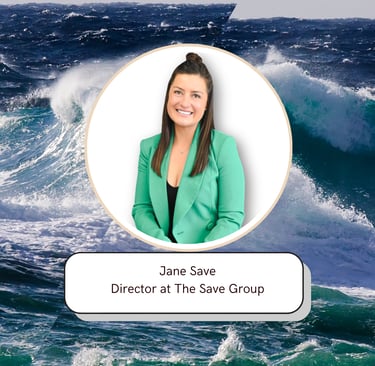
After thirty years of building and scaling MSPs, Nick and I have seen the same pattern play out again and again. Most service delivery issues that appear to be operational are actually people issues in disguise. Missed handovers, poor client communication, inconsistent follow through, knowledge bottlenecks, and rising team frustration rarely begin with tooling alone. They begin with leadership, clarity, and a willingness to have the right conversations early. That is why this episode of MSP Mastery: Ctrl Alt Deliver with Jane Save was so valuable. Jane works closely with small and mid sized businesses, including MSPs, and her practical HR perspective reinforced what we have long believed. Strong service businesses do not grow on technical capability alone. They grow when leaders create trust, set clear expectations, and deal with issues before they infect the culture. Jane’s stories were compelling, but the bigger lesson for MSP owners is this. Good people management is not a soft skill sitting on the edge of the business. It is a core operating discipline. When you get it right, retention improves, client experience improves, and profitability follows.
MSP Mastery
5/8/20267 min read

What MSP owners get wrong about people management and how to fix it
After thirty years of building and scaling MSPs, Nick and I have seen the same pattern play out again and again. Most service delivery issues that appear to be operational are actually people issues in disguise. Missed handovers, poor client communication, inconsistent follow through, knowledge bottlenecks, and rising team frustration rarely begin with tooling alone. They begin with leadership, clarity, and a willingness to have the right conversations early.
That is why this episode of MSP Mastery: Ctrl Alt Deliver with Jane Save was so valuable. Jane works closely with small and mid sized businesses, including MSPs, and her practical HR perspective reinforced what we have long believed. Strong service businesses do not grow on technical capability alone. They grow when leaders create trust, set clear expectations, and deal with issues before they infect the culture.
Jane’s stories were compelling, but the bigger lesson for MSP owners is this. Good people management is not a soft skill sitting on the edge of the business. It is a core operating discipline. When you get it right, retention improves, client experience improves, and profitability follows.
Retention starts with leadership, not perks
Why trust matters more than benefits
One of the strongest themes in this episode was retention. Many MSP owners still assume people stay because of salary, incentives, or a polished list of benefits. In our experience, that is only part of the story. People stay where they feel seen, where they trust their leaders, and where they believe their concerns can be raised without punishment.
Jane spoke about the importance of creating an environment where team members feel safe to speak up early. That aligns completely with what we have seen in MSPs over the years. In a high pressure service environment, small frustrations become big resignations when people feel they cannot say what is really going on. A team member who is bored, overwhelmed, or quietly disengaging will rarely announce it in a dramatic way. More often, the warning signs show up in subtle service slippage, reduced initiative, or a drop in energy.
That is why strong leaders do not wait for an exit interview to discover the truth. They create regular moments for honest conversation long before a resignation lands on the desk. In our own businesses, and in the businesses we advise, we have seen the value of staying close to the individual. Not just their role and their output, but their motivations, ambitions, and pressure points. If you know what matters to your people, you are in a much stronger position to retain them.
Jane’s point about flexibility also matters. The market has changed. MSP owners who still think attendance equals commitment are fighting the wrong battle. Flexibility is now part of the employment value proposition. The principle for owners is simple. Measure outcomes clearly, then allow capable adults enough room to achieve them in a way that works.
Progression must be visible or people will drift
Staying interviews reveal what annual reviews miss
Another insight from this episode that strongly supports our own framework is the need for visible progression. People do not necessarily need to climb into management to feel they are moving forward. But they do need to feel there is a future for them.
Jane’s discussion around the stay interview was particularly useful. We have long believed that too many businesses do all their serious listening at the wrong moments. They interview people when hiring them, and they interview them again when they are leaving. The critical space in the middle is often ignored.
For MSPs, that gap is expensive. When you lose someone after investing in onboarding, certifications, client context, and internal process knowledge, the replacement cost is significant. More importantly, the disruption lands directly on the service desk, the account management team, and the client experience.
The answer is not a more elaborate annual review. The answer is more frequent, more meaningful conversations about where a person wants to go and what might get in the way. We used similar rhythms in our own business, because when people can see a path, they are more likely to stay engaged. Sometimes that path is leadership. Sometimes it is deeper technical mastery. Sometimes, especially at different life stages, it is stability, flexibility, and better work life balance. All of those are valid forms of progression if they are discussed openly.
This is where many MSP owners get it wrong. They assume progression means promotion, then feel stuck when there is no obvious next title to offer. In reality, progression can be capability, confidence, autonomy, or a better aligned role. The important thing is that it is intentional and visible.
Performance management is a leadership discipline
The goal is clarity, not conflict
Performance management is one of those areas where avoidance creates far more pain than action. In this episode, Jane reinforced a point Nick and I have been making for years. Most performance problems are made worse by delay. Leaders notice a problem, talk about it privately, hope it resolves itself, and then bring six months of frustration into one clumsy conversation. By then, trust is damaged and the issue is harder to fix.
Good performance management is not about catching people out. It is about clarity. It means timely feedback, objective evidence, and a shared understanding of what success looks like. In an MSP, that matters enormously because service delivery is so measurable. Response times, ticket quality, communication standards, escalation behaviour, client satisfaction, documentation discipline, and team contribution all provide concrete signals.
Jane was right to emphasise that feedback must be anchored in specifics. Owners and managers who rely on vague impressions create defensiveness. Owners and managers who use observable examples create movement. That is why scorecards and clear role expectations matter so much. When people know the standard, you can coach to it.
What we also appreciated in Jane’s perspective was her reminder that performance management does not have to be negative. That is a critical mindset shift. If you have already invested in hiring and training someone, the first goal should be recovery, not removal. A structured conversation, handled well, can re engage a capable person who has drifted off track. Sometimes the issue is skill. Sometimes it is confidence. Sometimes it is a mismatch in expectations. When leaders approach the conversation with the intention to improve performance rather than simply document failure, the outcome is often better for everyone.
The real risk is the person you are afraid to confront
Why key person dependency is a service delivery problem
One of the most practical moments in this episode was the discussion about the person in a critical role who is underperforming, but who feels too risky to touch. Every mature MSP has encountered this at some stage. Someone knows the client history, the systems, or the internal workaround nobody else understands. They become untouchable, not because they are great, but because the business has allowed too much dependency to build around them.
From our perspective, that is not simply a people issue. It is an operational maturity issue. If one person can hold the business to ransom because the knowledge lives only in their head, the problem sits with leadership. Jane made a strong point here around documentation, cross training, and testing resilience by forcing the business to operate without its most critical people for a period of time. We agree completely.
This is where great MSPs separate themselves from average ones. Mature businesses design against key person risk. They insist on standard operating procedures, shared knowledge, and role coverage. They do not wait until a resignation or a performance crisis exposes the gap.
The same applies to excessive leave balances. Owners sometimes see leave purely as a financial liability, but in reality it is often a warning sign. Burnout, disengagement, unhealthy control over knowledge, or a complete lack of life outside work can all sit behind it. In service businesses, that eventually impacts clients. Leaders need to treat sustained leave build up as a signal worth investigating, not just an administrative inconvenience.
The hero moment is the honest conversation you have early
Strong leaders do not let discomfort run the business
If there is one practical lesson MSP owners should take from this episode, it is this. Trust your gut and have the conversation early. Jane said it plainly, and it is advice we would strongly reinforce. When something feels off, it usually is.
Over the years, Nick and I have both seen how quickly team morale lifts once an unresolved issue is finally addressed. The person involved often knows it is not working. The rest of the team usually knows it too. Yet many owners delay action because they fear conflict, disruption, or the effort of dealing with the fallout. In reality, the longer it drags on, the more damage it does.
The best difficult conversations are not dramatic. They are calm, direct, and grounded in genuine care. They make it clear what is not working, why it matters, and what needs to change. Sometimes that leads to renewed commitment and a stronger employee. Sometimes it leads to an amicable exit and a better fit elsewhere. Both outcomes can be healthy if handled with honesty and respect.
That is the real leadership moment. Not avoiding discomfort, but refusing to let discomfort dictate the quality of your business.
Final thoughts for MSP owners
This episode of MSP Mastery: Ctrl Alt Deliver was a timely reminder that the strongest MSPs are built on more than tools, process, and technical talent. They are built on leadership habits that create trust, accountability, and clarity.
Jane Save brought excellent real world examples to the conversation, but what stood out most for us was how closely her observations matched the patterns we have seen across decades in this industry. Retention improves when leaders listen. Performance improves when expectations are clear. Culture improves when issues are addressed early. Service delivery improves when people management is treated as a business discipline, not an afterthought.
If this episode prompted you to think about someone in your team, a conversation you have been avoiding, or a structural people risk in your business, that is probably the place to start. Reflect honestly on where your leadership rhythm is helping your people thrive and where it may be allowing drift, silence, or frustration to grow.
If you want to talk through what this looks like in your MSP, connect with Nick, me, and the MSP Mastery team. These are exactly the kinds of issues we help owners work through every day, and often the smallest shift in approach creates the biggest improvement in service delivery.