When a Supplier Breach Becomes Your Leadership Test
For most MSP owners, the real fear is not a server outage or a backlog of tickets. It is the moment when something outside your direct control still lands squarely on your desk, your team, and your client relationships. Over the past 30 years, Nick and I have seen the same pattern play out again and again. Clients rarely judge you only on the event itself. They judge you on how you lead through it, how you communicate under pressure, and whether your business has the maturity to stay steady when everyone else is rattled. That is exactly why this episode of MSP Mastery: Ctrl Alt Deliver matters. Mitch Colton joined us to share what happened when a major supplier security incident created a serious breach event for his business and clients. His story is compelling, but the real value for MSP owners is what it confirms. The MSPs that come through these moments strongest are not always the ones with the fanciest tooling. They are the ones with clear values, disciplined communication, strong relationships, and operational maturity long before the crisis arrives.
MSP Mastery
5/6/20266 min read

When a Supplier Breach Becomes Your Leadership Test
For most MSP owners, the real fear is not a server outage or a backlog of tickets. It is the moment when something outside your direct control still lands squarely on your desk, your team, and your client relationships. Over the past 30 years, Nick and I have seen the same pattern play out again and again. Clients rarely judge you only on the event itself. They judge you on how you lead through it, how you communicate under pressure, and whether your business has the maturity to stay steady when everyone else is rattled.
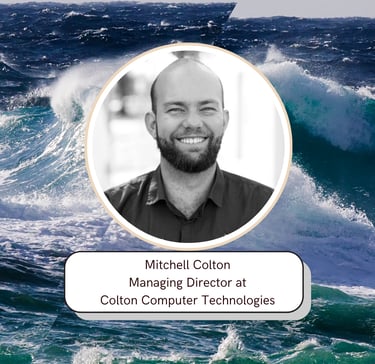
That is exactly why this episode of MSP Mastery: Ctrl Alt Deliver matters. Mitch Colton joined us to share what happened when a major supplier security incident created a serious breach event for his business and clients. His story is compelling, but the real value for MSP owners is what it confirms. The MSPs that come through these moments strongest are not always the ones with the fanciest tooling. They are the ones with clear values, disciplined communication, strong relationships, and operational maturity long before the crisis arrives.
Leadership starts before the incident
Preparation is not paperwork
One of the biggest mistakes we see in growing MSPs is confusing compliance activity with operational readiness. It is easy to feel reassured by certifications, vendor due diligence, and documented policies. Those things matter, and they should absolutely be part of a well run business. But when pressure hits, a thick folder of plans does not save you on its own. What saves you is knowing your non negotiables, knowing who does what, and being able to move without panic.
Mitch made this point clearly. His team had already done the work around process, planning, and preparedness. That did not stop the incident from happening, because some risks sit in the supply chain and can affect any MSP. What it did do was remove the paralysing confusion that often destroys the first critical hours. They knew who to call, how to structure the response, and how to start making decisions.
This aligns with what Nick and I have coached for years. An incident response plan is not there to predict every scenario. It is there to reduce the chaos at the start. If your people know the first actions, the first calls, and the first boundaries, you prevent unstructured panic. That alone can save enormous damage to team confidence and client trust.
Communication is the service
Clients need certainty before they get answers
When MSP owners talk about incident response, they often default straight to the technical story. Yet in this episode, the technical remediation had largely already been handled by the supplier. The real work was everything that followed. Mitch and his team were left to carry the communication burden, the client reassurance, the regulatory process, and the emotional weight. That is where many MSPs either strengthen their reputation or quietly destroy it.
What stood out to us was the decision to communicate early, communicate often, and own the narrative. That is exactly right. In regional markets especially, word travels fast. Silence does not buy you safety. It creates suspicion. Once clients feel they are discovering information somewhere else, your credibility starts to erode. By contrast, timely communication tells clients that you are engaged, responsible, and in control of what can be controlled.
This is a lesson every MSP owner should take seriously. During a crisis, communication is not an administrative task sitting alongside service delivery. It is service delivery. Clients can tolerate uncertainty far better than they can tolerate absence. Even when there is no new information, they need a cadence. They need to know when the next update is coming. That rhythm reduces anxiety, cuts down speculation, and stops your frontline team being buried under repeated inbound pressure.
Your team cannot carry ambiguity forever
Internal leadership must be deliberate
A theme Nick and I see constantly in MSP operations is that teams cope remarkably well with hard work, but they do not cope well with vagueness. In tough moments, people want clarity. They want to know what they can say, what they cannot say, who owns which decisions, and where to send problems they cannot solve themselves. Without that structure, even strong people start to fray.
Mitch handled this well. He brought the team together early, defined the boundaries, and designated specific people to handle incident related calls. Just as importantly, he recognised that business as usual still had to continue. This is one of the hardest realities for MSP owners. The incident may feel all consuming to leadership, but the rest of the client base still expects tickets answered, projects progressed, and normal support delivered.
That is why role clarity matters so much. You cannot throw the whole organisation into a single emotional whirlwind and hope it sorts itself out. Mature MSPs separate the response function from the rest of the service machine as much as possible. They identify who is client facing for the incident, who shields the help desk, who keeps the operational engine moving, and who supports the team emotionally when the pressure starts to drag on.
The other important point here is leadership posture. Mitch described a very practical servant leadership approach, asking his people what they needed and where he could run interference. That matters. In moments like this, your team does not need theatrics. They need a leader who is present, calm, available, and useful.
The hidden cost is not only the breach
Operational drag can hurt more than the event
One of the most important insights from this episode is something many MSPs underestimate. The damage from an incident is not limited to legal costs, forensic review, or insurance paperwork. It is also the opportunity cost of management attention. For months, Mitch's account management, sales, and communication capacity was consumed by the response. That meant no meaningful new business momentum during that period.
This is a serious business lesson. MSP owners often assess risk through the lens of direct remediation. In reality, the greater threat can be the drag on growth, cash flow, leadership energy, and strategic focus. When the owner and senior team are buried in incident work, pipeline creation slows, account development stalls, and the business loses forward motion. If you are a smaller MSP without financial resilience, that lag can become existential.
This is exactly why Nick and I push owners to think beyond technical preparedness and build operational resilience. Adequate cyber insurance matters. Professional indemnity cover matters. Strong broker relationships matter. But so does having enough maturity in your leadership bench and enough discipline in your service model that the whole business does not stop when one major event arrives.
In Mitch's case, the fact that they retained every client 18 months on says a lot. That did not happen by luck. It happened because the business chose to white glove the response all the way through, rather than pushing complexity back onto clients and hoping for the best. That is not the easy path, but it is often the commercially smarter one if you want to protect trust and preserve long term value.
The real case study is trust under pressure
Why clients stayed
The hero moment in this episode is not a dramatic technical fix. It is the fact that Mitch and his team kept every client after an event that could easily have triggered churn, blame, and reputational fallout. For Nick and me, that is the real lesson.
Why did it work? First, they stayed aligned to their values. They did not hide behind legal language or wait passively for someone else to define the story. Second, they had enough process maturity to act with structure rather than panic. Third, they understood that client experience during a crisis is shaped by responsiveness, honesty, and consistency. Finally, Mitch led from the front while still supporting his team in a practical way.
That combination is what mature service delivery looks like. It is not perfection. It is not control over every external risk. It is the ability to respond in a way that reassures clients that they are still in capable hands. That is what every MSP owner should be aiming for.
If you strip this episode back to first principles, the message is simple. Your clients do not expect a world where nothing ever goes wrong. They expect a provider who is prepared, accountable, and trustworthy when something does.
What MSP owners should take from this episode
This episode reinforces a lesson Nick and I have seen repeatedly across decades in the industry. The MSPs that survive pressure best are the ones that do the foundational work early. They define their non negotiables. They build trusted partner relationships before they need them. They create clear response structures. They communicate with discipline. And they understand that leadership during a crisis is as much about steadiness and empathy as it is about process.
Mitch's experience is a powerful reminder that even a well run MSP can be pulled into a major incident through the supply chain. That does not mean the game is over. It means your operational maturity is about to be tested in public.
If this episode has prompted you to think harder about your own readiness, that is a good thing. Take the time to review your incident response planning, your communication cadence, your insurance position, and the depth of your support network. If you want to talk through what operational maturity really looks like in practice, connect with Nick, me, and the MSP Mastery team. These are exactly the conversations that help MSPs grow stronger before they are forced to prove it the hard way.