Why Great MSPs Feel Like Part of the Team, Not Just Another Vendor
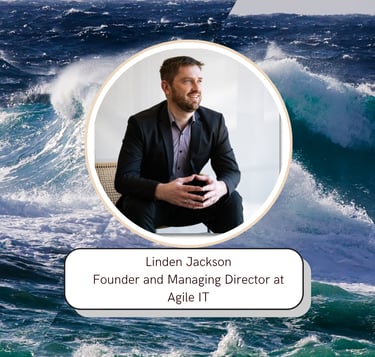
One of the most common frustrations we hear from MSP owners is this: “We deliver great technical outcomes, but clients still feel disconnected.” Tickets get resolved, systems stay online, and yet something is missing. The relationship feels transactional rather than embedded. In this episode of MSP Mastery: Ctrl Alt Deliver, we sat down with Linden Jackson, founder of Agile IT, to unpack what actually creates long term client loyalty. With nearly two decades of experience building a deliberately sustainable MSP, Linden brings a grounded perspective on service delivery that prioritises people over process without sacrificing performance.
MSP Mastery
4/3/20266 min read
Why Great MSPs Feel Like Part of the Team, Not Just Another Vendor
One of the most common frustrations we hear from MSP owners is this: “We deliver great technical outcomes, but clients still feel disconnected.” Tickets get resolved, systems stay online, and yet something is missing. The relationship feels transactional rather than embedded.
In this episode of MSP Mastery: Ctrl Alt Deliver, we sat down with Linden Jackson, founder of Agile IT, to unpack what actually creates long term client loyalty. With nearly two decades of experience building a deliberately sustainable MSP, Linden brings a grounded perspective on service delivery that prioritises people over process without sacrificing performance.
His journey reinforces something we see time and again. The MSPs that scale successfully are not just technically competent. They are deeply intentional about how clients experience their service.
From Break Fix Roots to Purposeful MSP Growth
Linden’s story will feel familiar to many in the industry. Starting in the early days of IT, selling hardware and working in reactive environments, he saw firsthand the shift from break fix to managed services.
What stands out is not just his experience, but his decision making. After a short stint in enterprise, he realised that his passion was not in large scale corporate environments. Instead, he was drawn to working closely with small to medium businesses, helping owners navigate technology in a practical and meaningful way.
That clarity shaped Agile IT. Rather than chasing aggressive growth, Linden focused on building a sustainable business with strong client relationships and a tight knit team.
From an MSP Mastery: Ctrl Alt Deliver perspective, this is a critical point. Growth for the sake of growth often leads to operational strain, inconsistent service, and cultural dilution. Sustainable growth, on the other hand, creates the foundation for consistent service delivery and long term profitability.
The Power of Being Seen as Part of the Client’s Team
When asked about one simple thing that makes customers feel heard, Linden’s answer was deceptively powerful. His team positions themselves as an extension of the client’s team.
This is not just a mindset shift. It is an operational standard.
Clients know who they are talking to. Engineers know the people behind the tickets. Conversations feel human, not transactional. There is continuity, familiarity, and trust.
From our experience, this is one of the most underutilised levers in service delivery. Many MSPs invest heavily in tools, automation, and process frameworks, but neglect the relational layer.
When clients feel like they are dealing with a faceless helpdesk, every interaction becomes a potential friction point. When they feel like they are working with their own internal team, tolerance increases, communication improves, and loyalty strengthens.
The practical takeaway here is simple. Design your service model so that clients recognise your people. This might mean smaller client pods, named account ownership, or consistent engineer allocation. The structure matters far less than the outcome, which is familiarity and trust.
Automation That Enhances, Not Replaces, Experience
Automation is often positioned as the silver bullet for MSP efficiency. Linden acknowledges its importance, particularly in ensuring consistent deployment of services as environments change.
His focus on automating onboarding and configuration is spot on. When a new user or device is introduced, automation ensures that nothing is missed. Security, access, and tooling are applied consistently without relying on manual processes.
However, there is an important nuance here. Automation should improve the customer experience, not degrade it.
We often see MSPs over automate to the point where clients feel trapped in rigid systems. Tickets get routed endlessly. Responses feel scripted. Flexibility disappears.
Linden’s approach strikes the right balance. Use automation to eliminate inconsistency and reduce risk, but keep the human layer strong and accessible.
One standout comment was his wish for automated time tracking. While said somewhat light heartedly, it highlights a deeper operational truth. Internal inefficiencies, like manual time entry, compound quickly and impact both profitability and team morale.
For MSP owners, the lesson is clear. Automate where it drives consistency and scalability, but never at the expense of the client experience.
SLAs Are a Safety Net, Not a Strategy
Service Level Agreements are often treated as the backbone of service delivery. Linden flips this thinking on its head.
For him, SLAs are a last resort, not the primary driver of behaviour.
His team is not trained to think in terms of “we have eight hours to respond.” Instead, they are focused on addressing client needs as they arise, prioritising based on impact rather than contractual thresholds.
This is a subtle but powerful shift.
When teams work to the SLA, they often aim to meet the minimum acceptable standard. When teams work to client outcomes, they aim to deliver the best possible experience.
Of course, SLAs still matter. They provide structure, accountability, and a baseline expectation. But they should not define your culture.
Linden also highlights the importance of educating clients on priority. Not every issue is equally critical, and helping clients understand this builds trust rather than frustration.
In our frameworks, we often talk about contextual prioritisation. This means aligning technical urgency with business impact. When clients understand why something is being prioritised, they are far more likely to accept delays on less critical issues.
The Hero Moment That Builds Lifetime Clients
Every MSP has stories of late nights and high pressure recoveries. Linden shared a classic example from the early days.
A food distribution business experienced a server failure and had already contacted multiple providers, all of whom focused on whether they had a specific replacement part. Linden took a different approach. He stepped back and asked a simple question. What is the actual problem?
That shift in thinking changed everything.
Rather than chasing a hardware component, he diagnosed the real issue, implemented a workaround, and had the business operational again by early morning. The result was not just a resolved incident, but a long term client relationship.
This is what we call the hero moment. It is not just about technical skill. It is about composure, curiosity, and a focus on outcomes.
The key insight here is that clients rarely remember the specifics of the fix. They remember how you made them feel during a crisis. Did you take control? Did you communicate clearly? Did you genuinely care about their business impact?
These moments define your brand far more than any marketing campaign.
Building a Premium Service That Clients Do Not Price Shop
One of the most compelling parts of the conversation was Linden’s perspective on pricing and positioning.
He is not interested in competing on price. Instead, his goal is to deliver a level of service so strong that clients do not even consider alternatives.
He likens it to choosing a premium local produce store over a supermarket. You pay more, but you understand the value.
This is exactly where mature MSPs need to position themselves.
If your service is easily comparable, it becomes a commodity. If it is deeply integrated into the client’s business and delivers consistent value, it becomes indispensable.
Achieving this requires more than good technology. It requires proactive engagement, clear communication, and a genuine understanding of the client’s goals.
It also requires confidence. Not every prospect is the right fit. Clients who are purely price driven will always be difficult to retain and serve profitably.
The Evolution from Owner Operator to Scalable Business
Perhaps the most honest reflection from Linden was around growth and control.
Like many MSP owners, he built a business where he was central to everything. Over time, this creates a bottleneck. The business can operate, but it cannot truly scale or evolve without the owner’s constant involvement.
His goal now is to build a structure where the business continues to grow and operate effectively without him needing to be across every detail.
This is a critical transition point for any MSP.
It requires putting the right people in place, defining clear responsibilities, and trusting the team to make decisions. It also requires the owner to let go, which is often the hardest part.
One of the most telling indicators of success is the moment when your team discusses a client and you are not familiar with them. For many owners, that feels uncomfortable. In reality, it is a sign that your business is becoming truly scalable.
Bringing It All Together
Linden Jackson’s journey is a powerful reminder that great service delivery is not about complexity. It is about clarity and consistency.
Becoming an extension of your client’s team. Using automation to support, not replace, human interaction. Treating SLAs as a baseline rather than a goal. Showing up when it matters most. Positioning your service as premium and valuable. Building a business that can operate beyond the owner.
These are the fundamentals that separate average MSPs from exceptional ones.
If you are looking at your own service delivery and wondering where to focus next, start with the client experience. Not just what you deliver, but how it feels to receive it.
If any of these themes resonate, or you want to explore how to apply them in your own MSP, the team at MSP Mastery: Ctrl Alt Deliver would love to help. Reach out for a conversation about your business, your challenges, and how we can support you in delivering exceptional service at scale.