Why MSP Owners Should Take Podcasting Seriously
In this episode of MSP Mastery: Ctrl Alt Deliver, Nick and I explored a topic that sits outside pure service delivery but lands squarely in the middle of modern MSP growth. Podcasting might sound like a marketing extra, something you get to once everything else is sorted, but after 30 years in this industry we know that the businesses that grow well are the ones that learn how to build trust at scale. That is the real challenge for most MSPs. Not just getting attention, but creating credibility before the first serious sales conversation. Too many owners still rely on referrals, a basic website, and the hope that good service will somehow speak for itself. Good service matters, of course, but if the market cannot see your expertise, hear your thinking, and understand your approach, then you are forcing every prospect to start from zero. That is why this conversation with Niall Mackay was so relevant. Niall is not an MSP owner, but his experience building a podcasting business reinforces something Nick and I have seen for years. Strong businesses create systems, build visibility, and remove unnecessary reliance on the founder. Podcasting, when done properly, supports all three.
MSP Mastery
5/13/20266 min read
Why MSP Owners Should Take Podcasting Seriously
In this episode of MSP Mastery: Ctrl Alt Deliver, Nick and I explored a topic that sits outside pure service delivery but lands squarely in the middle of modern MSP growth. Podcasting might sound like a marketing extra, something you get to once everything else is sorted, but after 30 years in this industry we know that the businesses that grow well are the ones that learn how to build trust at scale.
That is the real challenge for most MSPs. Not just getting attention, but creating credibility before the first serious sales conversation. Too many owners still rely on referrals, a basic website, and the hope that good service will somehow speak for itself. Good service matters, of course, but if the market cannot see your expertise, hear your thinking, and understand your approach, then you are forcing every prospect to start from zero.
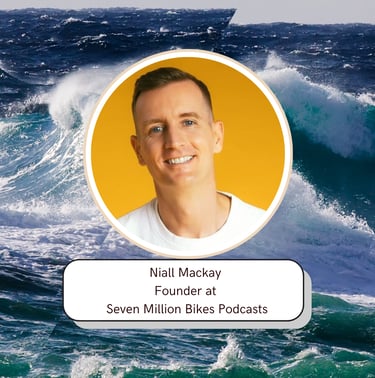
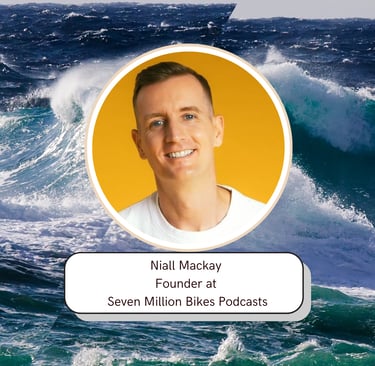
That is why this conversation with Niall Mackay was so relevant. Niall is not an MSP owner, but his experience building a podcasting business reinforces something Nick and I have seen for years. Strong businesses create systems, build visibility, and remove unnecessary reliance on the founder. Podcasting, when done properly, supports all three.
Visibility only matters when it is built on authority
Your brand needs a voice, not just a logo
One of the biggest mistakes MSP owners make is assuming their website, their service list, and a few client testimonials are enough to stand out. They are not. Most MSPs say similar things. They talk about great people, responsive service, strategic advice, and trusted partnerships. The problem is that everyone sounds the same.
What cuts through is a clear point of view.
That is where podcasting becomes powerful. It allows MSP owners to demonstrate how they think, how they lead, and what they believe matters in service delivery. In this episode, Niall made the point that every business is moving towards more visible and personal forms of marketing. We agree. Buyers want to know who is behind the brand. They want confidence that the people leading the business actually understand the challenges they face.
For MSPs, that matters even more. Managed services is a relationship driven business. Clients are not just buying tools or tickets. They are buying judgement, consistency, and trust. A podcast gives you a platform to show that before you ever sit across the table from a prospect.
Niall’s own business reflects this clearly. He has deliberately made himself visible in his brand because people want to know who they are working with. That aligns with what we tell MSP owners all the time. If your business depends on trust, then hiding behind generic marketing is a losing strategy.
Systems create scale and protect value
If the business depends on you, it is not ready to grow
A major theme in this episode was founder dependency, and this is where Niall’s story strongly supports the frameworks Nick and I use with MSPs. He spoke about spending serious time building automations and improving the backend of his podcasting business so that work could move through the system with less reliance on him personally.
That is not just an operational improvement. It is a maturity move.
We say often that every owner should build with an exit in mind, not because they must sell tomorrow, but because a business with options is a healthier business. If everything sits in the owner’s head, if every client conversation comes back to the founder, and if every delivery handoff requires manual intervention, then the business is fragile.
Niall described exactly the shift we encourage in MSPs. He moved from scattered communication, manual follow ups, and founder bottlenecks towards a structured workflow that creates visibility for the team and a better experience for the client. That mirrors what strong MSPs do when they formalise onboarding, standardise client communication, and create clear operational checkpoints.
The lesson here is simple. Systems are not bureaucracy. They are what make growth sustainable. They improve service quality, reduce stress, and increase the value of the business. Whether you are producing podcasts or delivering managed services, the principle is the same. The moment you start removing unnecessary dependency on the owner, you start building a real business.
Content works when it serves a clear purpose
Being interesting is not enough
There was a moment in this episode where Niall described a podcast that had no real purpose beyond two people having a conversation. It was a useful example because it highlights a trap many business owners fall into. They think starting a podcast means simply talking into a microphone and hoping the audience finds it compelling.
That approach rarely works.
Nick and I have always believed that content should be useful, intentional, and connected to a business objective. If an MSP starts a podcast, it should not be an exercise in self indulgence. It should be a way to educate the market, reinforce expertise, and stay relevant to existing clients and future prospects.
Niall’s advice was that the host must remain the expert voice. We agree with that completely. Guests can add richness, case studies, and alternative perspectives, but the authority of the show must belong to the business behind it. That is why on MSP Mastery: Ctrl Alt Deliver, our role is not to simply let guests talk. Our role is to interpret, challenge, and connect their experiences back to the realities MSP owners face every day.
This is an important lesson for any MSP considering content. Do not hand your platform over to someone else. Use it to sharpen your own position in the market. Your guest should support the message, not replace it.
Consistency beats intensity
The market rewards businesses that keep showing up
Another lesson from this episode was the importance of consistency. When we first discussed podcast cadence with Niall, he pushed hard on a weekly release schedule. At the time, that felt ambitious. In practice, he was right.
This is another pattern we see across MSPs. Many businesses start marketing with enthusiasm, then lose momentum because the process is too dependent on one person or because there is no structure around it. They produce a burst of activity, then disappear. The market notices that.
Consistency matters because it signals reliability. It tells your audience that you are serious, organised, and worth paying attention to. It also gives your content time to compound. One episode is a single touchpoint. Thirty episodes become a body of work. Over time, that library becomes an asset that supports sales conversations, onboarding, recruitment, and client confidence.
Niall’s point about ritual was especially important. Audiences come back when they know what to expect. That principle applies far beyond podcasting. Clients also value predictable communication, repeatable service experiences, and steady leadership. In that sense, podcast consistency is not just a marketing tactic. It reflects operational discipline.
For MSP owners, that should be a wake up call. If you cannot sustain the activity, the answer is not to avoid it altogether. The answer is to design a process that makes consistency possible.
The hero moment is not the microphone
The real win is building an asset that multiplies your message
The strongest case study in this episode was not a dramatic story. It was Niall’s description of how one piece of recorded content can become many assets. A single episode can become audio, video, short clips, blog content, website material, and social proof across multiple channels.
That is exactly why Nick and I see podcasting as a strategic business tool rather than a vanity exercise.
For MSPs, the real value is not the episode itself. It is what that episode makes possible. It gives your marketing team source material. It gives your sales team credibility. It gives your prospects a way to get to know you. It gives your business a voice that reaches beyond one meeting room or one networking event.
This is where many owners underestimate the opportunity. They see content creation as another task on the list, when in reality it can become a multiplier for every other part of the business. Niall’s experience proves that when the process is built properly, content stops being random effort and starts becoming a repeatable asset.
That is a mature way to think about growth. Not chasing more activity, but creating leverage from the work you are already doing.
Final thoughts for MSP owners
In this episode of MSP Mastery: Ctrl Alt Deliver, Niall Mackay gave us a useful lens on a question many MSP owners are starting to ask. Should we launch a podcast? From our perspective, the better question is this. Are you willing to build a visible, credible, systemised way of sharing your expertise with the market?
Because that is what podcasting really is.
Niall’s story reinforced several lessons Nick and I have seen across decades in this industry. Businesses grow when they reduce dependency on the founder. They become more valuable when systems replace improvisation. They win trust when their expertise is visible and consistent. And they stand out when they stop sounding like everyone else.
For MSP owners and service managers, this is not about becoming media personalities. It is about using modern channels to support proven business principles. If you have real expertise, clear thinking, and a point of view worth sharing, then there is a cost to staying silent. The market will not wait for you to feel ready.
If this episode has prompted you to think differently about how your business shows up, that is a good place to start. Reflect on whether your current marketing truly reflects the quality of your leadership and service delivery. If you want to talk through what that could look like in your business, connect with Nick, me, and the MSP Mastery team. We are always up for a practical conversation about what helps MSPs grow well.