Why MSPs Must Evolve Beyond Reactive Sales
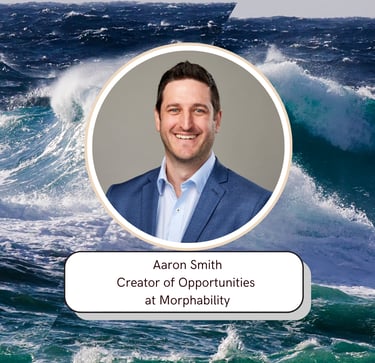
After more than 30 years building and scaling MSPs across Australia, Nick and I have seen one pattern repeat itself over and over again. The MSPs that continue to grow are the ones that stop thinking of themselves as technology providers and start acting like trusted business advisers. For years, many MSPs could rely on strong technical capability, responsive support, and long standing client relationships to maintain steady growth. That model worked when clients primarily needed someone to keep systems running and resolve issues quickly. But the market has shifted. Clients now expect strategic guidance, commercial insight, and proactive leadership from their MSP. In this episode of MSP Mastery: Ctrl Alt Deliver, Aaron Smith from Morphability reinforced something we have been discussing with MSP owners for years. Managed services alone are no longer enough to create meaningful differentiation. Every MSP can claim good support, responsive engineers, and reliable systems. What separates high growth MSPs today is their ability to lead business conversations that clients genuinely value. Aaron brought a practical and honest perspective to the discussion because he has lived through the challenges himself. His experience building sales capability inside MSPs mirrors many of the lessons Nick and I learned while scaling our own business. What stood out most was not simply his focus on sales, but his focus on operational maturity, leadership structure, and strategic client engagement.
MSP Mastery
5/11/20266 min read
Why MSPs Must Evolve Beyond Reactive Sales
After more than 30 years building and scaling MSPs across Australia, Nick and I have seen one pattern repeat itself over and over again. The MSPs that continue to grow are the ones that stop thinking of themselves as technology providers and start acting like trusted business advisers.
For years, many MSPs could rely on strong technical capability, responsive support, and long standing client relationships to maintain steady growth. That model worked when clients primarily needed someone to keep systems running and resolve issues quickly. But the market has shifted. Clients now expect strategic guidance, commercial insight, and proactive leadership from their MSP.
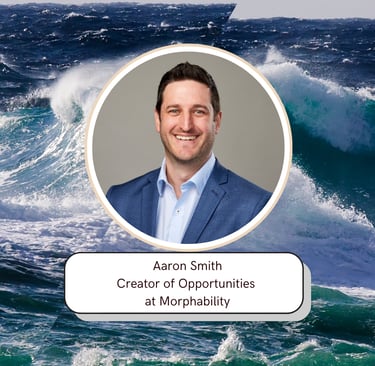
In this episode of MSP Mastery: Ctrl Alt Deliver, Aaron Smith from Morphability reinforced something we have been discussing with MSP owners for years. Managed services alone are no longer enough to create meaningful differentiation. Every MSP can claim good support, responsive engineers, and reliable systems. What separates high growth MSPs today is their ability to lead business conversations that clients genuinely value.
Aaron brought a practical and honest perspective to the discussion because he has lived through the challenges himself. His experience building sales capability inside MSPs mirrors many of the lessons Nick and I learned while scaling our own business. What stood out most was not simply his focus on sales, but his focus on operational maturity, leadership structure, and strategic client engagement.
The MSPs Winning Today Are Acting Like Consultants
One of the strongest themes from this episode was the idea that MSPs must evolve from reactive service providers into genuine consultants.
Nick and I have watched this transition happen across the industry for years. The MSPs that continue to rely solely on fixing issues and maintaining infrastructure often find themselves trapped in price pressure and commoditised services. They become interchangeable in the eyes of clients because their value is difficult to distinguish from every other provider in the market.
Aaron articulated this perfectly when he described managed services as becoming the next commodity product. We agree completely. Basic support and maintenance are now considered table stakes. Clients assume competence in these areas. They are not choosing providers based purely on ticket resolution anymore.
The real opportunity lies in helping clients navigate risk, growth, security, operational efficiency, and emerging technologies like AI. MSP owners who can facilitate those conversations position themselves as strategic partners rather than suppliers.
This is where many owner led MSPs struggle. Technical expertise alone does not automatically translate into business advisory capability. The MSP owner often understands technology deeply but may not consistently engage clients in conversations about commercial outcomes, operational maturity, or future planning.
Aaron made an important point when he explained that clients eventually disengage when they no longer see ongoing value. We saw this ourselves during our MSP journey. When quarterly conversations became operational rather than strategic, clients slowly drifted away. Not because support quality collapsed, but because another provider stepped in and had better business conversations.
The lesson for MSP owners is clear. If your client meetings are still centred entirely around tickets, projects, and infrastructure, you are already behind.
Owner Led Sales Eventually Creates a Ceiling
Most Australian MSPs begin with owner led sales. Ours certainly did.
In the early stages, it makes perfect sense. The owner has the deepest knowledge of the business, the strongest relationships, and the highest level of trust with clients. Deals close faster because the owner carries credibility and authority.
The problem is that this model eventually creates a growth ceiling.
Aaron spoke candidly about this during the conversation, and his observations align closely with what we have seen across hundreds of MSPs. Owners often struggle to step away from sales because they believe nobody else can represent the business as effectively as they can. In reality, the issue is usually less about capability and more about control.
Many MSP owners become trapped between operational leadership, client relationships, service oversight, and sales execution. Over time, this creates fatigue, inconsistency, and bottlenecks throughout the business.
Nick openly reflected on his own experience during this episode. Like many founders, he initially held onto major opportunities and key client relationships because he wanted to control outcomes. While understandable, this approach limited the development of the broader team.
The turning point came when responsibilities began shifting into clearer roles. Nick focused on strategic client engagement while others handled account management and sales execution. Once that structure matured, the business became significantly more scalable.
This is a critical lesson for MSP owners. Growth requires delegation, but delegation without structure creates chaos. Owners must intentionally build systems, processes, and coaching mechanisms that allow others to succeed.
Aaron described this brilliantly when discussing the importance of teaching people how to fish rather than simply taking over every important opportunity yourself. That mindset shift is fundamental to building a mature MSP.
Process Creates Scalable Sales
One of the biggest mistakes MSPs make when attempting to grow sales is hiring a business development manager before establishing proper internal structure.
Nick and I see this repeatedly. An MSP hires a salesperson expecting immediate growth, yet there are no defined processes, no clear positioning, no structured onboarding, and no operational alignment behind the scenes. Predictably, the salesperson struggles, morale drops, and the owner concludes that salespeople do not work in MSPs.
The problem is rarely the individual alone. More often, the business itself is unprepared.
Aaron explained that scalable sales require consistent operational foundations first. We strongly agree with this approach. Before aggressively pursuing growth, MSPs must ensure they can consistently deliver quality outcomes, maintain compliance standards, and onboard clients effectively.
One insight that particularly resonated with us was Aaron’s recommendation that MSP owners should first invest in sales administration support rather than immediately hiring hunters.
This is practical advice that many MSPs overlook. Owners often spend enormous amounts of time preparing quotes, processing renewals, handling administration, and managing repetitive sales tasks. These activities consume valuable strategic time.
By introducing strong administrative support early, owners free themselves to focus on higher value activities like strategic conversations, client leadership, and long term planning.
This also improves responsiveness. Clients should not wait weeks for straightforward proposals or renewals. Operational efficiency itself becomes part of the client experience.
Once that foundation exists, businesses can then separate account management from hunting activities more effectively.
Compliance Focused Account Management Builds Retention
Another important discussion during this episode centred around the changing role of account management inside MSPs.
Historically, many Australian MSPs treated account managers primarily as salespeople. Their success was measured by growth targets and revenue expansion. While growth remains important, modern account management increasingly requires a compliance and strategic alignment focus.
This shift makes sense.
Strong account managers ensure clients remain aligned with operational standards, security frameworks, lifecycle planning, and strategic roadmaps. Their role becomes less about aggressive selling and more about maintaining client maturity and reducing risk exposure.
Nick shared a powerful story from our own MSP experience involving a regional hospital. The breakthrough did not come from selling more technology. It came from helping the client understand operational risk and compliance gaps.
That conversation changed the relationship completely.
This is exactly the type of value modern MSPs must deliver. Clients want guidance. They want clarity. They want someone who understands how technology decisions impact broader business outcomes.
Aaron also made an excellent observation about identifying clients at risk. Many MSPs only focus on unhappy clients. In reality, some of the biggest risks come from clients quietly outgrowing their provider.
If your MSP cannot evolve alongside the client’s business, somebody else eventually will.
That is why strategic conversations matter so much. Quarterly reviews should uncover future direction, operational priorities, business challenges, and growth objectives. Without those discussions, the MSP slowly becomes irrelevant.
Sustainable Growth Requires Clarity
One of the most valuable moments in this episode was Aaron’s distinction between growth focused MSPs and lifestyle focused MSPs.
This is an area where many owners lack honesty with themselves.
Not every MSP owner wants a massive acquisition outcome or national expansion. Some owners simply want a profitable, sustainable business that supports a strong lifestyle and stable team. There is absolutely nothing wrong with that.
The key is clarity.
If you are pursuing aggressive growth, your systems, leadership structure, sales process, and operational maturity must support that ambition. If you are building a lifestyle business, your focus may shift more toward profitability, client retention, and operational efficiency.
Problems arise when MSPs say they want growth while continuing to operate with owner dependency, inconsistent process, and reactive decision making.
Aaron’s honesty about the lessons learned during difficult growth periods was refreshing because it reflected a reality many MSP owners experience privately. Sustainable growth is rarely smooth. It requires constant adjustment, disciplined leadership, and a willingness to evolve.
Final Thoughts
This episode of MSP Mastery: Ctrl Alt Deliver reinforced something Nick and I firmly believe. MSP growth is no longer purely about technical capability. It is about leadership, strategic thinking, operational maturity, and the ability to create genuine business value for clients.
Aaron Smith brought tremendous practical insight to this conversation because his experiences mirror the challenges many MSP owners face every day. His focus on process, accountability, strategic engagement, and structured growth aligns strongly with the frameworks we have developed over decades in the industry.
For MSP owners listening to this episode, the challenge is simple. Ask yourself whether your business is still operating like a reactive service provider or whether you are actively building a consultancy that clients cannot afford to lose.
The MSPs that thrive over the next decade will be the ones that lead conversations, guide strategy, and consistently evolve alongside their clients.
If this episode sparked questions about your own sales structure, account management approach, or growth strategy, we encourage you to connect with Nick, myself, and the MSP Mastery team. Sometimes the biggest breakthrough comes from stepping back, reassessing the foundations, and building the right structure for the next stage of growth.