Why Scaling an MSP Breaks Without the Right Support Structure
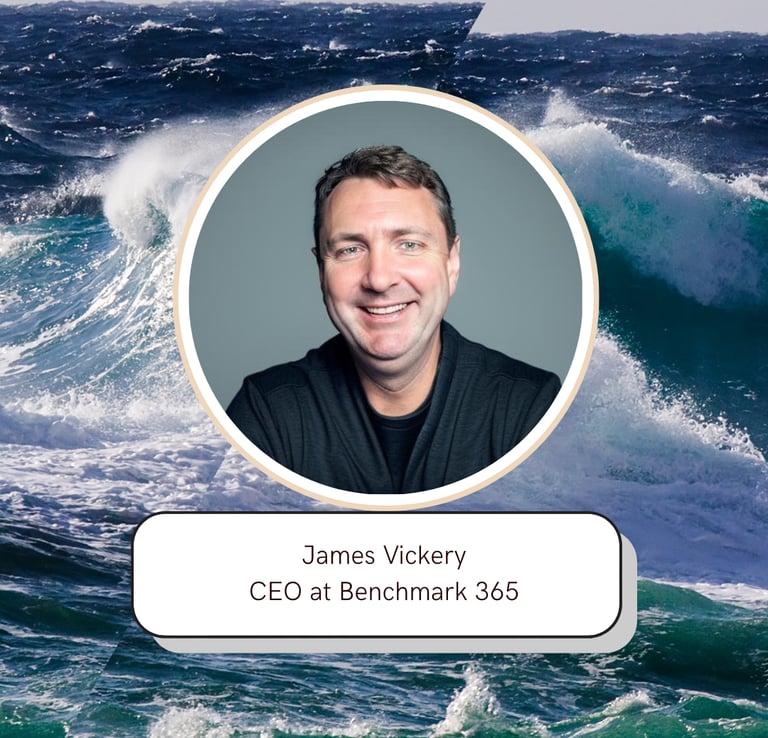
After 30 years of building and scaling MSPs, Nick and I have seen a consistent pattern. Growth does not fail because of poor technical capability. It fails because the business cannot sustain consistent service delivery as it scales. At a certain point, the owner becomes the safety net. They step in when tickets escalate, when staff are overwhelmed, or when a key client needs attention. It works for a while. Until it does not. In this episode of MSP Mastery: Ctrl Alt Deliver, we sat down with James Vickery from Benchmark 365. James has lived this journey himself. He built and scaled an MSP before creating a global support model that now helps MSPs deliver at scale. His experience reinforces something we have long taught. Sustainable growth only happens when service delivery is designed to operate without the owner.
MSP Mastery
4/15/20265 min read
Why Scaling an MSP Breaks Without the Right Support Structure
After 30 years of building and scaling MSPs, Nick and I have seen a consistent pattern. Growth does not fail because of poor technical capability. It fails because the business cannot sustain consistent service delivery as it scales.
At a certain point, the owner becomes the safety net. They step in when tickets escalate, when staff are overwhelmed, or when a key client needs attention. It works for a while. Until it does not.
In this episode of MSP Mastery: Ctrl Alt Deliver, we sat down with James Vickery from Benchmark 365. James has lived this journey himself. He built and scaled an MSP before creating a global support model that now helps MSPs deliver at scale. His experience reinforces something we have long taught. Sustainable growth only happens when service delivery is designed to operate without the owner.
The Myth of Scaling with the Same Structure
One of the biggest mistakes we see MSPs make is trying to scale using the same structure that got them to their current size.
Nick and I have worked with countless MSPs who hit that ceiling. They hire more technicians, add more software, and push harder. But nothing fundamentally changes. The owner is still the escalation point. The team is still stretched. The client experience starts to wobble.
James described this exact cycle from his early MSP days. Winning business, managing staff, then back again. It is a loop that feels productive but ultimately limits growth.
The key principle here is simple. Scaling requires a different operating model, not just more people.
James’ shift was to build layers of redundancy into his service delivery. Not as a cost play, but as a capacity and consistency play. That distinction matters. When MSPs focus purely on cost, they compromise quality. When they focus on structure, they unlock scale.
For MSP owners, the takeaway is clear. If your growth depends on you stepping in, you have not built a scalable business yet.
Dependability Is the Real Product
MSPs often think they are selling technical expertise. In reality, what clients are buying is dependability.
Over the years, Nick and I have seen that clients rarely leave because of a single technical failure. They leave because of inconsistent experience. Delays. Poor communication. A sense that no one is in control.
James articulated this well. If a client has to think about IT, the MSP is already failing.
This aligns directly with what we teach. Service delivery maturity is about removing uncertainty for the client. That requires consistent response times, clear communication, and predictable outcomes.
James highlighted three common triggers for client churn. Poor support responsiveness, poorly executed projects, and the aftermath of major incidents like cyber attacks. All of these come back to the same root issue. Lack of dependable service delivery.
The lesson here is not about working harder. It is about building a model where dependability is engineered into the business.
You Cannot Scale Without Enough People
This is where many MSPs push back. They want efficiency. They want automation. They want software to replace people.
We understand that thinking. But it is incomplete.
Nick and I have always said that service businesses scale on people first, then systems. Not the other way around.
James reinforced this with a blunt reality. If you do not have enough people to meet demand, service will suffer. No amount of software or automation will fix that.
What was particularly interesting in this episode was the breakdown of workload. Around half of what happens in an MSP is administrative, not technical.
This is something we have seen repeatedly. Highly paid technicians doing low value admin work. Updating tickets. Chasing clients. Scheduling follow ups.
It is inefficient and it limits capacity.
James’ approach of separating administrative and technical roles aligns strongly with the frameworks we advocate. When you protect your technical resources from admin overhead, productivity increases and client experience improves.
For MSP owners, this is often a mindset shift. It feels like adding cost. In reality, it creates leverage.
The Offshore Conversation Needs to Grow Up
This is a topic we feel strongly about.
There is still a lot of outdated thinking around offshore teams. The language alone often reveals the problem. Onshore versus offshore. Local versus overseas. It creates an artificial divide.
As we said in this episode, it is one team. If you treat people differently, they will behave differently.
James has spent over a decade building global teams, and his experience supports what we have seen. Success does not come from hiring cheaper resources. It comes from building a cohesive, well structured team regardless of location.
One of the most important insights he shared was that offshore is not a one to one replacement. You cannot take a broken role locally and expect it to work offshore. That simply transfers the problem.
Instead, you need to design the team properly. Build redundancy. Create clear communication frameworks. Establish strong culture.
We have seen MSPs succeed with global teams when they focus on integration, not separation. The businesses that fail are the ones that treat offshore as a shortcut.
Culture Is Built Through Structure
A lot of MSPs talk about culture, but very few operationalise it.
What stood out in James’ approach was how structured communication drives behaviour. Daily huddles. Data driven conversations. Clear visibility of performance. Regular feedback loops.
Nick and I have always emphasised that culture is not what you say. It is what you consistently do.
One example that resonated was the use of simple frameworks in ticket communication. We implemented similar structures in our own MSP. Every ticket had to clearly state what was done, what the outcome was, who was informed, and what happens next.
It sounds basic, but it transforms clarity both internally and for the client.
James also highlighted the importance of giving teams permission to speak up. Especially in environments where cultural norms may discourage it. This is critical for maintaining service quality at scale.
The broader lesson is that culture does not happen by accident. It is designed through systems, communication, and leadership behaviour.
The Hero Moment: Losing a Client to Learn a Bigger Lesson
One moment from this episode perfectly captures the turning point many MSP owners face.
James lost a major client while he was travelling. A server failed. The team could not handle it. The client walked.
We have seen versions of this story countless times.
At that moment, there are two options. Blame the team and try to fix individuals. Or recognise that the system itself is broken.
James chose the latter.
He realised the business was too dependent on key individuals, including himself. That insight drove his decision to build a more resilient, layered service model.
This is a classic example of what we teach. Service delivery maturity is about reducing single points of failure.
For MSP owners, the question is simple. If your best technician or you as the owner disappeared tomorrow, would your service still hold up?
If the answer is no, that is where your focus needs to be.
Conclusion
This episode reinforces a set of principles Nick and I have seen proven time and time again.
Scaling an MSP is not about working harder or adding more software. It is about building a service delivery model that is structured, repeatable, and independent of any one person.
Dependability is the product. People are the engine. Structure is what makes it all work.
James’ journey is a strong example of what happens when you step back and redesign the business properly. His experience validates the frameworks we have developed over decades.
If you are feeling stretched, constantly stepping in, or struggling to maintain consistency as you grow, it is not a capacity problem. It is a design problem.
A Final Thought
If this episode has you reflecting on your own service delivery model, that is a good thing.
Nick and I work with MSPs every day who are navigating these exact challenges. If you want to explore how to build a more scalable, dependable operation, reach out to the MSP Mastery team.
Sometimes the biggest shift comes from seeing your business through a different lens.